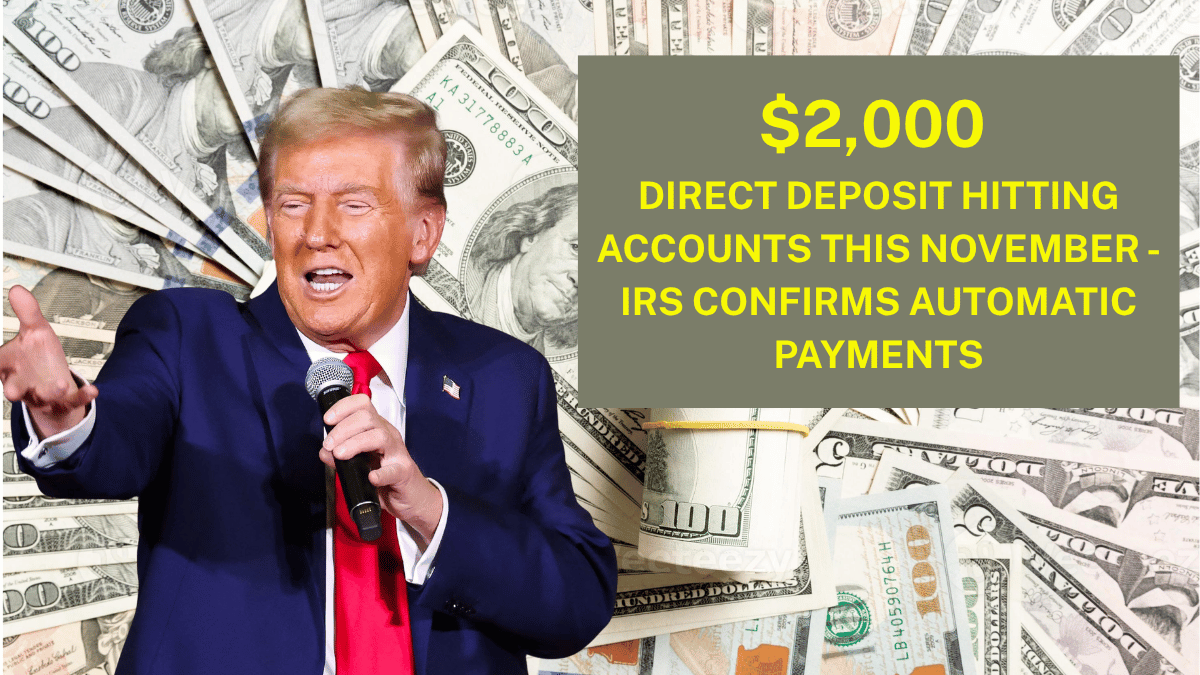
Millions of Americans may soon see a $2,000 direct deposit from the federal government. Under a newly announced relief initiative, eligible citizens will automatically receive a one-time payment of $2,000—or $4,000 for married couples filing jointly—through the Internal Revenue Service (IRS).
Here’s a clear breakdown of what the program covers, who qualifies, when payments go out, and how to make sure you don’t miss yours.
What’s Behind the Payment
The federal relief program aims to offset rising living costs and persistent inflation pressures.
Here’s the basic structure:
- Eligible individuals receive $2,000.
- Married couples filing jointly can receive $4,000.
- Payments go automatically by direct deposit using the banking details on file with the IRS.
- Those without direct-deposit info will receive a paper check by mail.
No separate application is required if your tax or benefit information is current. The goal: deliver timely support to workers, retirees, and low-income families facing higher everyday costs.
Who Qualifies
To be eligible for the November 2025 payment, you must meet the following:
Citizenship and Residency
- Be a U.S. citizen or lawful permanent resident with a valid Social Security Number or Taxpayer ID.
- You cannot be claimed as a dependent on another person’s tax return.
Tax-Filing Requirement
- You must have filed a 2024 federal tax return (or, in limited cases, 2023).
- If you receive Social Security, SSI, or SSDI and aren’t required to file taxes, the IRS will verify your eligibility automatically through benefit agencies.
Income Limits
To receive the full $2,000:
- Single filers: AGI under $75,000
- Head of household: AGI under $112,500
- Married filing jointly: AGI under $150,000
Payments phase out above these limits and stop entirely past certain income thresholds. Dependents cannot claim the payment separately.
How Payments Will Arrive
Direct Deposits:
The IRS will begin issuing direct deposits between November 15 and 25, 2025, processing payments in batches. Those who filed early and have valid banking details on file will likely receive funds first.
Paper Checks:
If you lack valid direct-deposit info, expect a mailed check between late November and early December 2025. Mailing may take an additional 2–4 weeks.
Tracking Your Payment:
A temporary “Get My Payment” tracker will go live on IRS.gov, showing whether your payment is approved, sent, or mailed. You’ll also receive an IRS notice confirming the payment amount and method.
Deadlines to Note:
- File or update your 2024 tax return by October 31, 2025.
- Update bank or address information by November 10, 2025 to be included in the first wave.
Preparing for a Smooth Deposit
Before November arrives, double-check these essentials:
- Confirm your filing status. Ensure your 2024 tax return is filed and accurate.
- Update banking details. Use your IRS Online Account (or benefit-agency portal) to prevent deposit errors.
- Rely only on official channels. The IRS will never request personal data via text or email.
- Beware of scams. Messages promising early access or application links are fraudulent.
- Plan your use. Consider how the payment fits your November budget—covering essentials, paying down debt, or saving for emergencies.
The payment is non-taxable, meaning you won’t need to report it on your 2025 return—but keep records for reference.
How Americans Might Use the Money
Analysts say a $2,000 one-time payment can provide short-term relief in key areas:
- Everyday bills: Rent, utilities, groceries, and healthcare.
- Debt reduction: Paying down credit-card or loan balances.
- Savings cushion: Boosting emergency funds for future stability.
- Economic ripple: Extra consumer spending could modestly lift local economies.
- Holiday support: The timing—mid-November—gives households breathing room before year-end expenses.
While one-time payments don’t solve long-term wage or housing issues, they can help ease immediate pressure for millions of households.
Cautions and Unknowns
A few caveats still apply:
- Legislation & funding: The final rollout depends on budget authorization; delays are possible.
- Debt offsets: Payments may be reduced if you owe taxes, child support, or federal debt.
- Non-filers: Those without tax returns must be identified through SSA or VA databases to avoid missing out.
- Timing risk: Mailing delays or mismatched banking details could push some deposits into December.
- Scam alerts: Fraudsters often exploit new benefit programs—avoid any request for “application fees.”
- Inflation effect: Large-scale relief can influence inflation expectations, though economists view this program as moderate in scale.
FAQs
Do I need to apply?
No — payments are automatic if your IRS or benefit-agency info is up to date.
Is the payment taxable?
No. It’s treated as a non-taxable relief benefit.
What if I didn’t file 2024 taxes?
Benefit recipients like Social Security or SSI users remain eligible if their agencies have current records. Others may need to file a “non-filer” return by the cut-off date.
What if my bank account changed?
Update your details via your IRS account before November 10, 2025.
What if I owe back taxes or child support?
Part or all of your payment could be offset; check your IRS notice for specifics.
How can I track my payment?
Visit IRS.gov after November 15, 2025 and use the tracking tool.
What if I never receive it?
If the deposit hasn’t arrived by December 15 (Direct Deposit) or January 15 (Check), contact the IRS and confirm your eligibility and account details.
Bottom Line
The November 2025 $2,000 direct-deposit program represents one of the most significant federal relief efforts in recent years—offering targeted, short-term financial help as Americans continue to navigate high living costs.
If you qualify, ensure your tax filings, bank info, and contact details are current to avoid delays. Stay informed through IRS.gov, ignore unofficial messages, and treat the payment as a financial boost—not a windfall. Used wisely, it can help stabilize household budgets heading into the new year.